
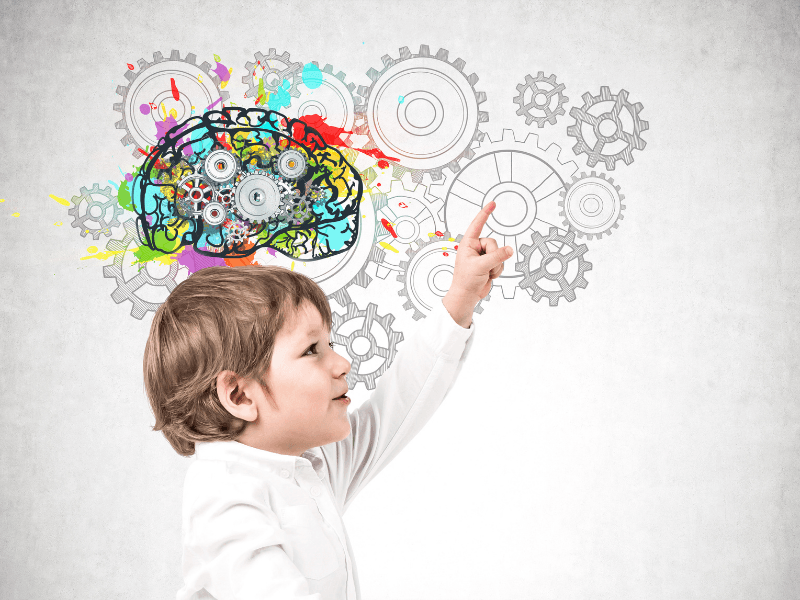
Ο εγκέφαλος: το πιο περίπλοκο όργανο του ανθρώπινου σώματος
Ποιο είναι το πιο περίπλοκο όργανο του Κεντρικού Νευρικού Συστήματος;
1. Ο εγκέφαλος: ο ακούραστος μαχητής
Ο εγκέφαλος είναι το πιο σύνθετο και ταυτόχρονα το πιο σημαντικό όργανο του Κεντρικού Νευρικού Συστήματος. Είναι ο μαχητής που εργάζεται ασταμάτητα, συγκεντρώνει πληροφορίες, τις οργανώνει και οδηγεί σε δράση. Δεν είναι τυχαίο που συχνά χαρακτηρίζεται ως το διαμάντι του ανθρώπινου σώματος.
2. Η ικανότητά του να αλλάζει: η πλαστικότητα
Η σπουδαιότητα του εγκεφάλου φαίνεται από την ικανότητά του να αλλάζει και να προσαρμόζεται. Αυτή η ιδιότητα ονομάζεται πλαστικότητα και αποτελεί τη βάση της εξέλιξης και της μάθησης σε όλη τη διάρκεια της ζωής.
3. Οι επιτελικές (εκτελεστικές) λειτουργίες
Ορισμένες από τις βασικές επιτελικές λειτουργίες – που εδράζονται κυρίως στις προμετωπιαίες περιοχές – είναι:
- Η προσοχή
- Η επίλυση προβλημάτων
- Ο έλεγχος της συμπεριφοράς
- Η λειτουργία της μνήμης εργασίας
Όπως αναφέρει ο Funasashi (2001), οι επιτελικές λειτουργίες είναι «το προϊόν της συντονισμένης λειτουργίας ποικίλων διεργασιών, προκειμένου να επιτευχθεί ένας ορισμένος στόχος με ευέλικτο τρόπο».
4. Με τι ρυθμούς ταχύτητας αναπτύσσεται ο εγκέφαλος;
Η ανάπτυξη του εγκεφάλου χαρακτηρίζεται από ταχείς ρυθμούς (Brierley, 1993).
- Με το που γεννιέται ένα μωρό, ο εγκέφαλός του έχει ήδη αναπτυχθεί κατά 30% της τελικής του μορφής (Dunsworth, 2016).
- Μέχρι την ηλικία των 2 ετών, φτάνει περίπου στο 75% της ανάπτυξής του (Bjorklund, 2021).
Αυτό σημαίνει πως τα πρώτα χρόνια της ζωής είναι απολύτως κρίσιμα για τη διαμόρφωση της γνωστικής, συναισθηματικής και συμπεριφορικής βάσης κάθε παιδιού.
Θες να καταλάβεις ακόμη καλύτερα πώς λειτουργεί ο εγκέφαλος του παιδιού σου;
Κατέβασε το eBook μας
👉 «Εγκεφαλική Ανάπτυξη του Παιδιού»
Μέσα από τις σελίδες του θα ανακαλύψεις:
- Ποια είναι τα κρίσιμα στάδια ανάπτυξης του εγκεφάλου
- Πώς συνδέονται οι εμπειρίες με τη νευρωνική ωρίμανση
- Τι μπορείς να κάνεις καθημερινά για να υποστηρίξεις το παιδί σου
Γιατί ο εγκέφαλος δεν «δουλεύει» απλώς. Χτίζει τη σχέση του παιδιού με τον εαυτό του και τον κόσμο.
Allen, L. R., & Kelly, B. B. (2015). Transforming the workforce for children birth through age 8: a unifying foundation. The National Academies Press.
Barnett, L. (2005). Keep in touch: The importance of touch in infant development. Infant Observation, 8(2), 115–123. https://doi.org/10.1080/13698030500171530
Bjorklund, D. F. (2021). How children invented humanity the role of development in human evolution. Oxford University Press.
Blue, C. M., & Darby, M. L. (2021). Darby's comprehensive review of dental hygiene. Mosby.
Brierley, J. (1993). Growth in children. Cassell.
Chiras, D. D. (2013). Human body systems: structure, function, and environment. Jones & Bartlett Learning.
Chorna, O., Filippa, M., De Almeida, J. S., Lordier, L., Monaci, M. G., Hüppi, P., … Guzzetta, A. (2019). Neuroprocessing Mechanisms of Music during Fetal and Neonatal Development: A Role in Neuroplasticity and Neurodevelopment. Neural Plasticity, 2019, 1–9. https://doi.org/10.1155/2019/3972918
Corbeil, M., Trehub, S. E., & Peretz, I. (2015). Singing Delays the Onset of Infant Distress. Infancy, 21(3), 373–391. https://doi.org/10.1111/infa.12114
Dawson, G., Frey, K., Panagiotides, H., Osterling, J., & HessI, D. (1997). Infants of Depressed Mothers Exhibit Atypical Frontal Brain Activity A Replication and Extension of Previous Findings. Journal of Child Psychology and Psychiatry, 38(2), 179–186. https://doi.org/10.1111/j.1469-7610.1997.tb01852.x
Dhikav, V., & Anand, K. S. (2012). Hippocampus in health and disease: An overview. Annals of Indian Academy of Neurology, 15(4), 239. https://doi.org/10.4103/0972-2327.104323
Dunsworth, H. M. (2016). Thank your intelligent mother for your big brain. Proceedings of the National Academy of Sciences, 113(25), 6816–6818. https://doi.org/10.1073/pnas.1606596113
Engmann, C., Wall, S., Darmstadt, G., Valsangkar, B., & Claeson, M. (2013). Consensus on kangaroo mother care acceleration. Lancet, 382(9907), e26–e27. http://dx.doi .org/10.1016/S0140-6736(13)62293-X
Field, T. (1995). Touch in Early Development. New Jersey: Erlbaum.
Funahashi, S. (2001). Neuronal mechanisms of executive control by the prefrontal cortex. Neuroscience Research-Supplement, 39, 147-65.
Gilmore, J. V., & Gilmore, E. C. (1982). Give your child a future. Prentice-Hall.
Graham, A. M., Fisher, P. A., & Pfeifer, J. H. (2013). What Sleeping Babies Hear. Psychological Science, 24(5), 782–789. https://doi.org/10.1177/0956797612458803
Gursul, D., Goksan, S., Hartley, C., Mellado, G. S., Moultrie, F., Hoskin, A., … Slater, R. (2018). Stroking modulates noxious-evoked brain activity in human infants. Current Biology, 28(24). https://doi.org/10.1016/j.cub.2018.11.014
Gutnick, A., Blechman, J., Kaslin, J., Herwig, L., Belting, H.-G., Affolter, M., … Levkowitz, G. (2011). The Hypothalamic Neuropeptide Oxytocin Is Required for Formation of the Neurovascular Interface of the Pituitary. Developmental Cell, 21(4), 642–654. https://doi.org/10.1016/j.devcel.2011.09.004
Head Zauche, L., Darcy Mahoney, A. E., Thul, T. A., Zauche, M. S., Weldon, A. B., & Stapel-Wax, J. L. (2017). The Power of Language Nutrition for Children’s Brain Development, Health, and Future Academic Achievement—Continuing Education Posttest. Journal of Pediatric Health Care, 31(4), 504–505. https://doi.org/10.1016/j.pedhc.2017.02.003
Hepper, P. G., & Shahidullah, B. S. (1994). Development of fetal hearing. Archives of Disease in Childhood - Fetal and Neonatal Edition, 71(2). https://doi.org/10.1136/fn.71.2.f81
Kikuchi, Y., & Noriuchi, M. (2015). The Neuroscience of Maternal Love. Neuroscience Communications. https://doi.org/10.14800/nc.991
Kim, E. J., Pellman, B., & Kim, J. J. (2015). Stress effects on the hippocampus: a critical review. Learning & Memory, 22(9), 411–416. https://doi.org/10.1101/lm.037291.114
Kim, S., & Strathearn, L. (2016). Oxytocin and Maternal Brain Plasticity. New Directions for Child and Adolescent Development, 2016(153), 59–72. https://doi.org/10.1002/cad.20170
Leong, V., Byrne, E., Clackson, K., Georgieva, S., Lam, S., & Wass, S. (2017). Speaker gaze increases information coupling between infant and adult brains. https://doi.org/10.1101/108878
Libretexts. (2020, August 14). 1.2C: Levels of organization. https://med.libretexts.org/Bookshelves/Anatomy_and_Physiology/Book%3A_Anatomy_and_Physiology_(Boundless)/1%3A_Introduction_to_Anatomy_and_Physiology/1.2%3A_Life/1.2C%3A_Levels_of_Organization.
Light, K. C., Smith, T. E., Johns, J. M., Brownley, K. A., Hofheimer, J. A., & Amico, J. A. (2000). Oxytocin responsivity in mothers of infants: A preliminary study of relationships with blood pressure during laboratory stress and normal ambulatory activity. Health Psychology, 19(6), 560–567. https://doi.org/10.1037/0278-6133.19.6.560
Luby, J. L., Barch, D. M., Belden, A., Gaffrey, M. S., Tillman, R., Babb, C., … Botteron, K. N. (2012). Maternal support in early childhood predicts larger hippocampal volumes at school age. Proceedings of the National Academy of Sciences, 109(8), 2854–2859. https://doi.org/10.1073/pnas.1118003109
Maitre, N. L., Key, A. P., Chorna, O. D., Slaughter, J. C., Matusz, P. J., Wallace, M. T., & Murray, M. M. (2017). The Dual Nature of Early-Life Experience on Somatosensory Processing in the Human Infant Brain. Current Biology, 27(7), 1048–1054. https://doi.org/10.1016/j.cub.2017.02.036
Miller, J. S. (2020). Confident parents, confident kids: raising emotional intelligence in ourselves and our kids--from toddlers to teenagers. Fair Winds Press.
Moberg Kerstin Uvnäs. (2015). Oxytocin: the biological guide to motherhood. Hale Publishing, L.P.
Otero, T. M., & Barker, L. A. (2013). The Frontal Lobes and Executive Functioning. Handbook of Executive Functioning, 29–44. https://doi.org/10.1007/978-1-4614-8106-5_3
Reynolds-Miller, R. L. (2016). Potential Therapeutic Benefits of Babywearing. Creative Nursing, 22(1), 17–23. https://doi.org/10.1891/1078-4535.22.1.17
Shonkoff, J. P., & Phillips, D. (2003). From neurons to neighborhoods: the science of early child development. National Academy Press.
Sun, I., Varanda, C., Fernandes, F. (2017). Stimulation of Executive Functions as Part of the Language Intervention Process in Children with Autism Spectrum Disorder. Folia Phoniatrica et Logopaedica, 69, 78-83. Doi10.1159/000479586.
UvnäsMoberg, K., Ekström-Bergström, A., Buckley, S., Massarotti, C., Pajalic, Z., Luegmair, K., … Dencker, A. (2020). Maternal plasma levels of oxytocin during breastfeeding—A systematic review. PLOS ONE, 15(8). https://doi.org/10.1371/journal.pone.0235806
Wall, G. (2017). ‘Love builds brains’: representations of attachment and children's brain development in parenting education material. Sociology of Health & Illness, 40(3), 395–409. https://doi.org/10.1111/1467-9566.12632
Wijaya, R. D., Madjid, T. H., & Alwi, E. H. (2020). The Effect of Touch and Sound Therapy to The Level of Pain and Physiological Parameters in Infants. IJNP (Indonesian Journal of Nursing Practices), 4(1). https://doi.org/10.18196/ijnp.41102
Yang, H.-P., Wang, L., Han, L., & Wang, S. C. (2013). Nonsocial Functions of Hypothalamic Oxytocin. ISRN Neuroscience, 2013, 1–13. https://doi.org/10.1155/2013/179272
Χαρίτου, Σ. (2020). Η σημασία της ανάπτυξης των εκτελεστικών λειτουργιών στην προσχολική ηλικία. Πανελλήνιο Συνέδριο Επιστημών Εκπαίδευσης, 8, 1250. https://doi.org/10.12681/edusc.2814